

Google Cloud Consulting Solutions
Google Cloud enables modern, data-driven products, but startups and SMEs often struggle to structure it as systems and teams scale. This consulting service helps teams make clear GCP decisions around architecture, service selection, security boundaries, cost behavior, and long-term stability before complexity becomes hard to reverse.
Key GCP Consulting Areas
- GCP Architecture & Service Strategy
- Cloud Migrations & Environment Planning
- Cost, Security & Operational Governance
Trusted by Global Industry Leaders


70+
Projects Launched
50+
Satisfied Customers
7+
Years Experience
97%
Client Retention
Proven Software Development Results
As a trusted global software development partner, we bring dedicated expertise and proven delivery experience to support enterprise-grade software solutions worldwide.
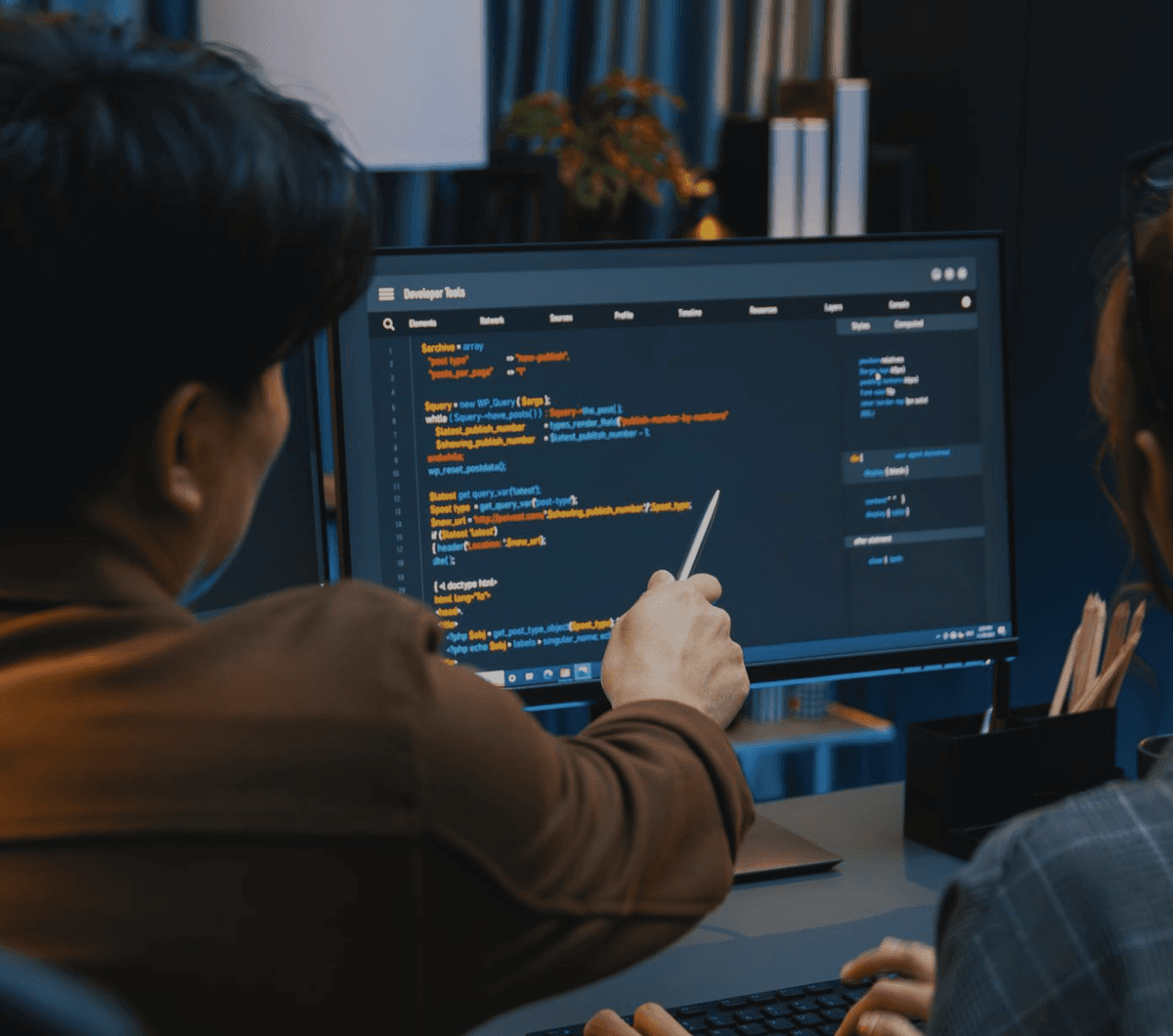
Committed to Excellence
Our achievements reflect our dedication to quality and expertise across various fields. With certifications in industry standards and partnerships with leading platforms, we uphold the highest benchmarks in software development and service delivery. Trust in our commitment to excellence for your projects.


Our Services

Our Google Cloud consulting services deliver tailored strategies to help businesses optimize performance, control costs, and drive cloud-based innovation.

We assist businesses in migrating from on-premise, hybrid, or other cloud platforms to Google Cloud, ensuring secure transitions with minimal downtime and cost-efficient workloads.

We modernize legacy systems using Google Cloud technologies to improve performance, enhance security, reduce technical debt, and lower operational costs.

Our GKE consulting services help deploy, secure, and automate containerized applications on Google Cloud with efficient workflows and reliable performance.

We implement DevOps on Google Cloud with CI/CD pipelines, infrastructure automation, and monitoring to simplify workflows and speed up deployments.

We test your Google Cloud environment under real-world traffic to assess performance, reliability, and resource efficiency under pressure.
Technology Stack Used in GCP







Extended Google Cloud Consulting Solutions
As Google Cloud environments grow, the pressure usually comes from change rather than load new teams, new features, new data paths, and new operational expectations. Without regular course correction, early decisions start working against the product instead of supporting it.
Long-term Google Cloud environments don’t stay healthy by accident. They remain manageable because teams revisit foundational decisions as products, traffic patterns, and ownership models change a mindset commonly seen in structured enterprise cloud transformation efforts rather than one-time platform setup.
Rather than treating cloud setup as a fixed milestone, this approach helps teams continuously validate whether architecture, access models, and data flows still reflect how the product actually operates.
Architecture & Service Boundary Reviews
As GCP environments expand, services often grow dependent on each other in ways that are hard to untangle later. This review examines how compute, data, and supporting services interact, highlighting where boundaries should be clarified to keep changes localized and ownership clear.
1. Migration Readiness & Transition Planning
Before workloads move or systems are reorganized on Google Cloud, teams need a clear view of sequencing and risk. This guidance focuses on evaluating dependencies, data paths, and environment structure, including selecting the right GCP migration tools based on workload type, data sensitivity, and operational constraints.
2. Cost Behavior & Usage Analysis
Cloud spend rarely grows evenly. This review looks at how usage patterns influence cost across services, particularly in environments like cloud-based e-commerce platforms where traffic variability, search behavior, and integrations directly affect resource usage.
3. IAM & Access Model Evolution
Access models that work for small teams often break down as organizations grow. This guidance revisits project structure, roles, and permissions to reduce access sprawl while keeping day-to-day work practical.
4. Data Flow & Storage Layout Guidance
As products accumulate data sources, pipelines can become fragmented. This advisory work reviews how data moves and where it is stored, helping teams reduce duplication and improve clarity across analytics and operational systems.
5. Environment & Release Strategy Advisory
Inconsistent environment setup leads to fragile releases. This guidance focuses on environment separation and rollout structure so changes move through systems predictably without disrupting active users.
6. Operational Guardrails & Governance Alignment
Controls and policies are reviewed to ensure they reflect how teams actually work. The goal is governance that supports oversight and accountability without adding unnecessary friction.
7. Ongoing GCP Decision Support
As products evolve, earlier cloud decisions often need reassessment. Periodic advisory reviews help teams validate new choices and avoid drifting into patterns that create long-term operational drag.
Google Cloud Consulting Use Cases We Support
Google Cloud Consulting Engagement Workflow
Smart Process.
Strong Result
Current-State Architecture Review
GCP compute, networking, data flows, IAM, and environments are reviewed to understand real production behavior.
Constraint & Risk Mapping
Usage patterns, cost trends, access boundaries, and dependencies are analyzed to surface risk and overhead early.
Architecture & Governance Direction
Clear guidance is defined for service selection, environments, access models, and cost control, with trade-offs documented.
Execution Alignment & Next Steps
Recommendations are converted into practical next steps, guardrails, or phased changes aligned to team workflows.
Innovate. Accelerate Succeed
They have strong expertise in the latest technologies and provide excellent guidance in using them effectively.
CODE B launches the products quickly, and their solutions have excellent architecture and are scalable.
CODE B is proactive in coming up with solutions.
Aside from getting the job done, they’re able to provide their expertise and share their opinion.
They’re a very bright team that requires minimal levels of communication or time investment to be very effective.
Their constant communication was a key aspect of the success.
They completed the project within the timeline we gave them, and they did it within budget.
Had a great experience working with the team and in times of crisis, CODE B team was always there to support us.
The way that they have supported us by giving us one of their developers to work directly with our development team.
Our overall experience has been very positive.
They are friendly and reliable.
The ability to deliver on time impressed us the most.
They’re excellent at what they do and come up with solutions for various problems.
CODE B will work overtime to resolve issues, which is a difficult trait to find.
Code B’s communicative.
I’ve had a great experience working with CODE B
The main positive point of working with CODE B team is their analyzing skills.
They are receptive and try to adjust to meet our requirements.
Why Choose Code B for Google Cloud Consulting
Decisions Anchored in Real Usage
GCP guidance is based on how your systems behave in production actual workloads, access patterns, and operational limits rather than reference architectures or generic diagrams.
Risk Surfaced Before It Becomes Expensive
IAM gaps, service sprawl, cost leakage, and unclear ownership are identified early, when changes are still manageable and don’t disrupt active teams.
Architecture That Teams Can Operate
Recommendations account for team size, skill mix, and ownership boundaries, helping avoid cloud designs that look correct on paper but fail in day-to-day operations.
Clear Trade-Offs, Not One-Size Choices
Service and architecture options are evaluated side by side, with explicit trade-offs documented so teams understand why certain GCP paths are chosen over others.
Governance Without Slowing Delivery
Access models, environment structure, and guardrails are designed to support control and compliance without blocking routine development or releases.
Advisory That Extends Beyond Initial Review
As products evolve, follow-up reviews help teams reassess cloud decisions, adapt to new usage patterns, and prevent long-term drift in their GCP environments.
Engagement Models for Google Cloud Consulting
Frequently asked questions (FAQs)

 WhatsApp
 Call Us
 Mail Us